Meteorites are “fossils” of solar system evolution, preserving primordial information from the presolar molecular cloud and even interstellar dust. Among them, chondrites—formed by accretion of primitive materials in the protoplanetary disk and having escaped extensive melting and differentiation—are among the most primitive materials in the solar system. Based on the similarity in multiple isotopic compositions, some studies have proposed that Earth’s building blocks may have originated from the same reservoir as enstatite chondrites (ECs). Although models for Earth’s building blocks remain debated in terms of geochemical composition and dynamics, many studies suggest that Earth’s main body grew by accreting numerous embryos that had already undergone core–mantle differentiation. The differentiation of planetesimals depends on two key conditions: a heat source to drive melting and efficient metal-silicate separation. Experiments and simulations indicate that enstatite has a high melting point, and small planetesimals lack sufficient heat sources, making core–mantle differentiation thermodynamically challenging. This raises a key question: How did planetesimals accreted from fine particles in the protoplanetary disk differentiate to form embryos?
To address this question, the research team led by Prof. DU Wei from the State Key Laboratory of Critical Mineral Research and Exploration at the Institute of Geochemistry, Chinese Academy of Sciences (IGCAS), systematically studied the accretion and differentiation history of early solar system embryos with enstatite chondrite (EH-type) compositions, using high-temperature and high-pressure experiments combined with planetary thermal evolution simulations. There are several key findings as follows:
Based on experimental results, the team established a new core-mantle differentiation model: 20%–25% partial melting of silicates is sufficient to allow rapid percolation and segregation of metallic melt and core formation at temperatures several hundred degrees Celsius below the pure-Fe melting point assumed in previous studies. According to this new model, the accretion ages and sizes of planetesimals inferred from iron meteorite parent bodies need to be re-evaluated.
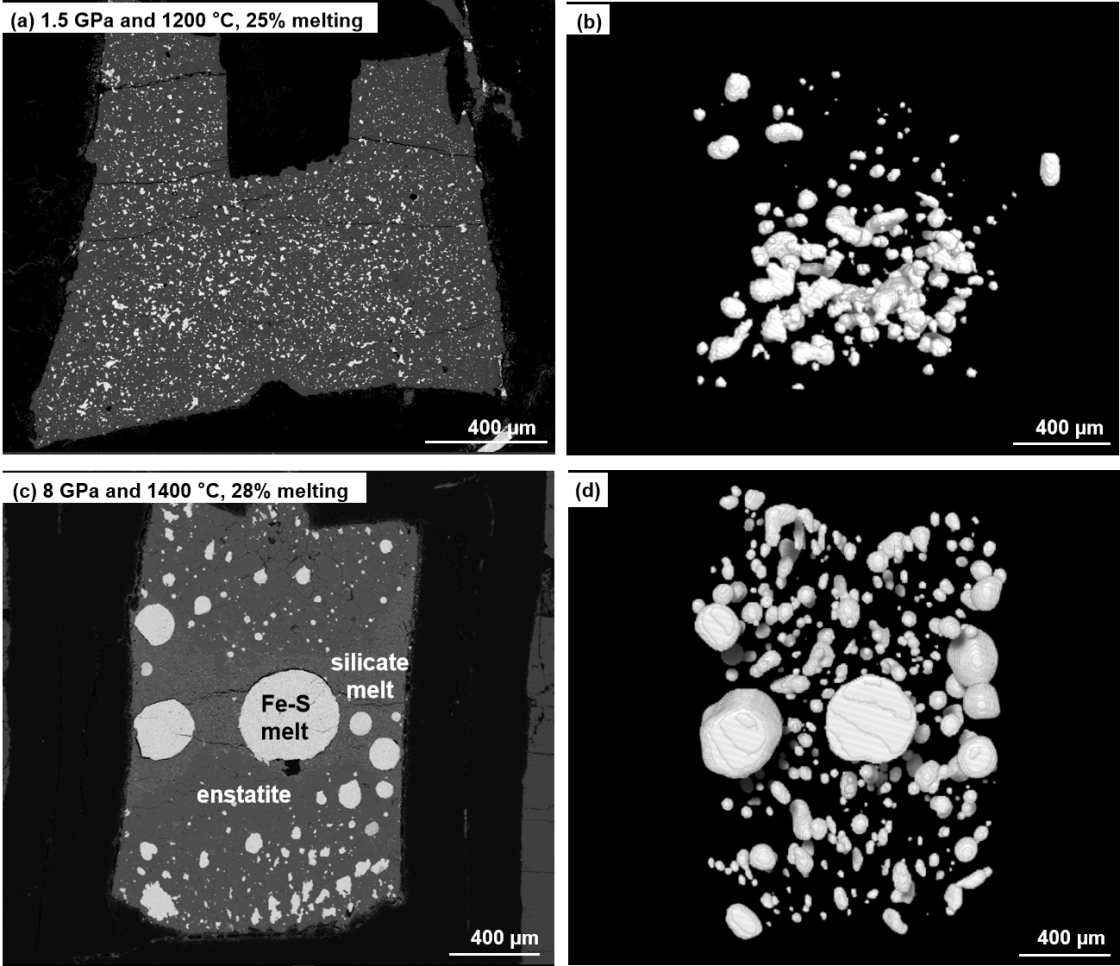
Fig.1. Back-scattered electron (BSE) images and three-dimensional X-ray micro-CT images of run products (Image by IGCAS).
EH-chondrite-like materials in the early solar system followed two distinctevolutionary pathways.(1) Differentiated EH-like embryos—important building blocks of the terrestrial planets—had to complete accretion within 1.4 Myr after CAI formation and then took approximately 1 Myr to differentiate; their radii were approximately 100–500 km. (2) Planetesimals with radii of 110–190 km that accelerated 1.9–2.0 Myr after CAI formationand developed a thermally stratified “onion-shell” structure, together with later-accreted single-structure planetesimals with estimated radii of 100–245 km (2.18–3.8 Myr after CAI formation), may represent EH chondrite parent bodies.
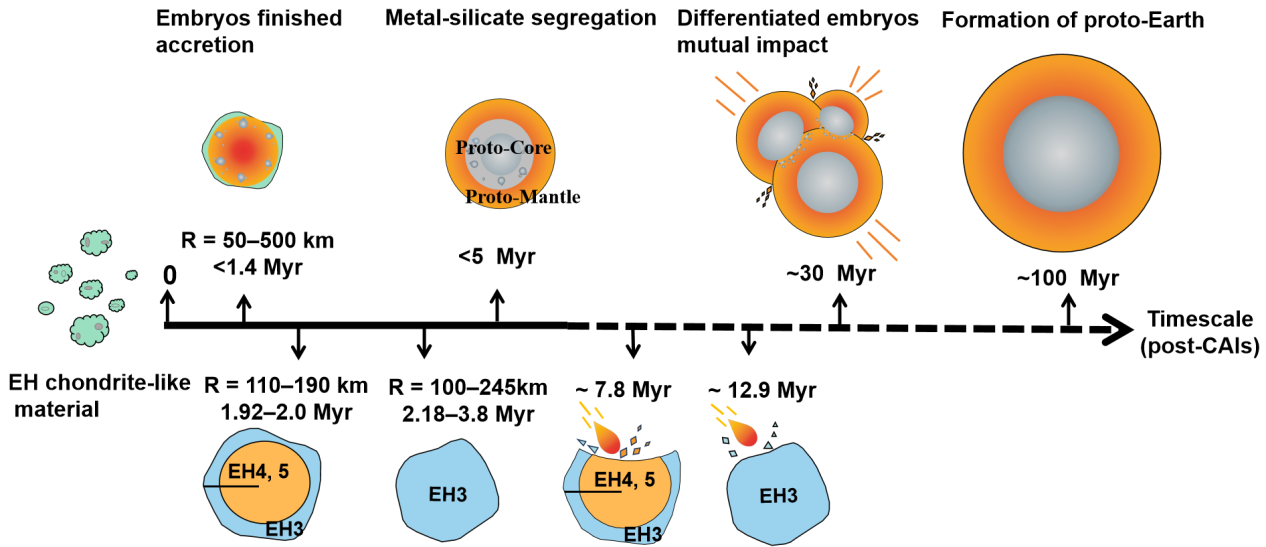
Fig. 2. Evolutionary trajectories of EH-like embryos (Image by IGCAS).
This study has important implications for understanding the material composition, dynamic evolution, and chronology of early solar system planet formation. It provides a useful framework for studying the accretion and parent-body thermal evolution of other early solar system materials. The new core–mantle differentiation model also provides insights into the volatile contents of differentiated early solar system embryos and the sources of volatiles on the early Earth.
These results were published in Communications Earth & Environment. The research was supported by the National Key R&D Program of China (2024YFF0807500), General Programs of the National Natural Science Foundation of China (41973058, 41773052), the Guizhou Science and Technology Innovation Platform Research Project (CXPTXM [2025] 027), the Open Fund of the State Key Laboratory of Critical Mineral Metallogeny and Prediction (202601), and the Class A Strategic Leading Science and Technology Project of the Chinese Academy of Sciences (XDA0430303).
Publication Information: Li Q., Du W.*, Yang J., Zhang C., Yao D., Zong KQ., Chen FY., Wang YG & Liu Y. (2026). Rapid accretion of enstatite chondrite (EH)-like embryos as impactors for the proto-Earth. Communications Earth & Environment. 7, 905.
Paper Link: https://doi.org/10.1038/s43247-026-03836-x
Contact:
DU Wei
Institute of Geochemistry, Chinese Academy of Sciences
duwei@mail.gyig.ac.cn
(By Prof. Du Wei’s group)


